Fabric decides how formal trousers drape, breathe, move and age. This library explains the main families of trouser cloth, from wool and its blends to cotton, polyester blends, stretch and textured weaves, and what each means for comfort, care and the seasons.
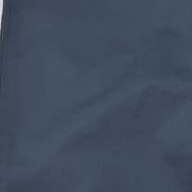
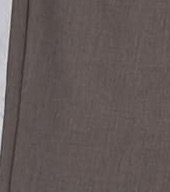
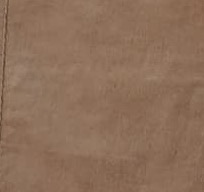
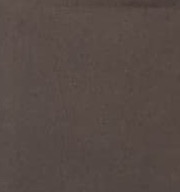
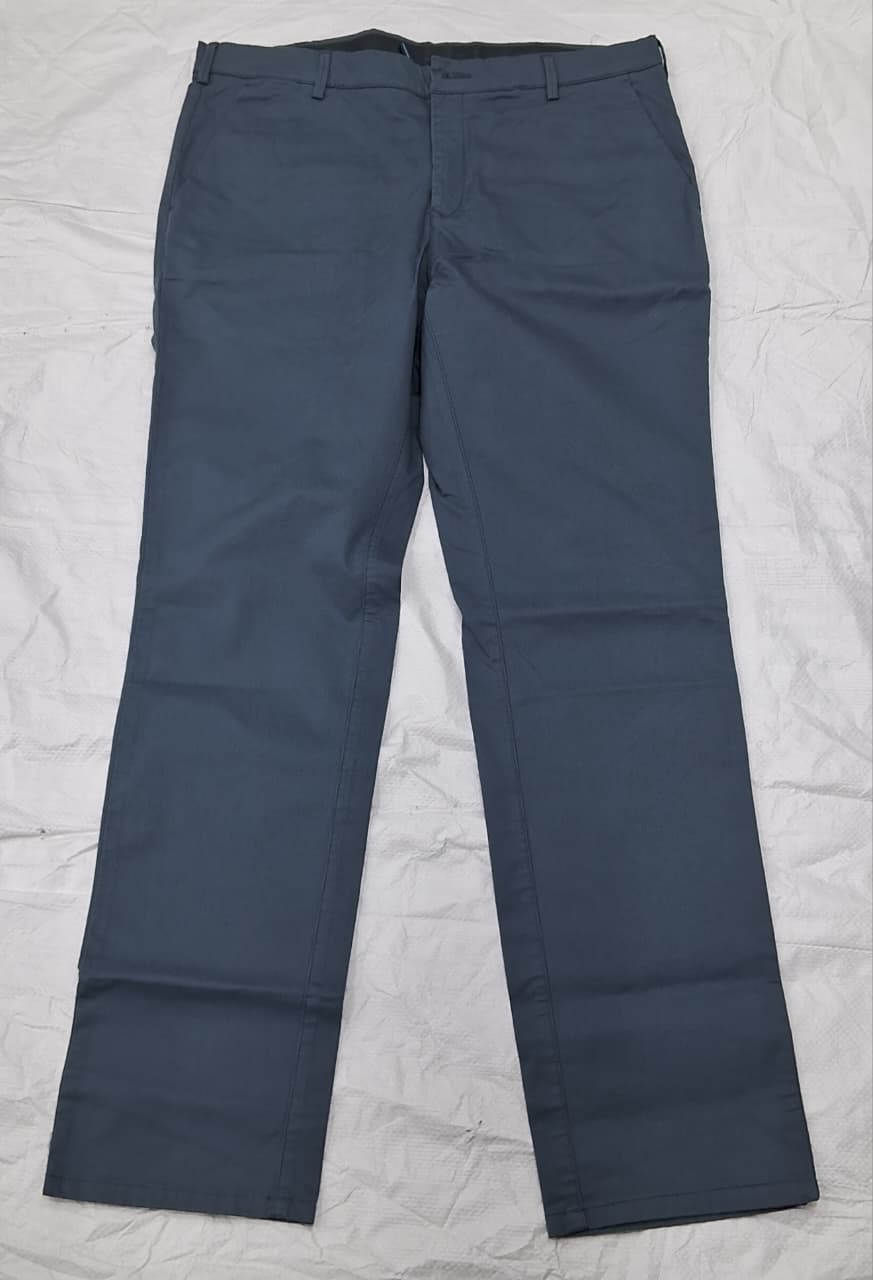
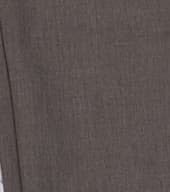
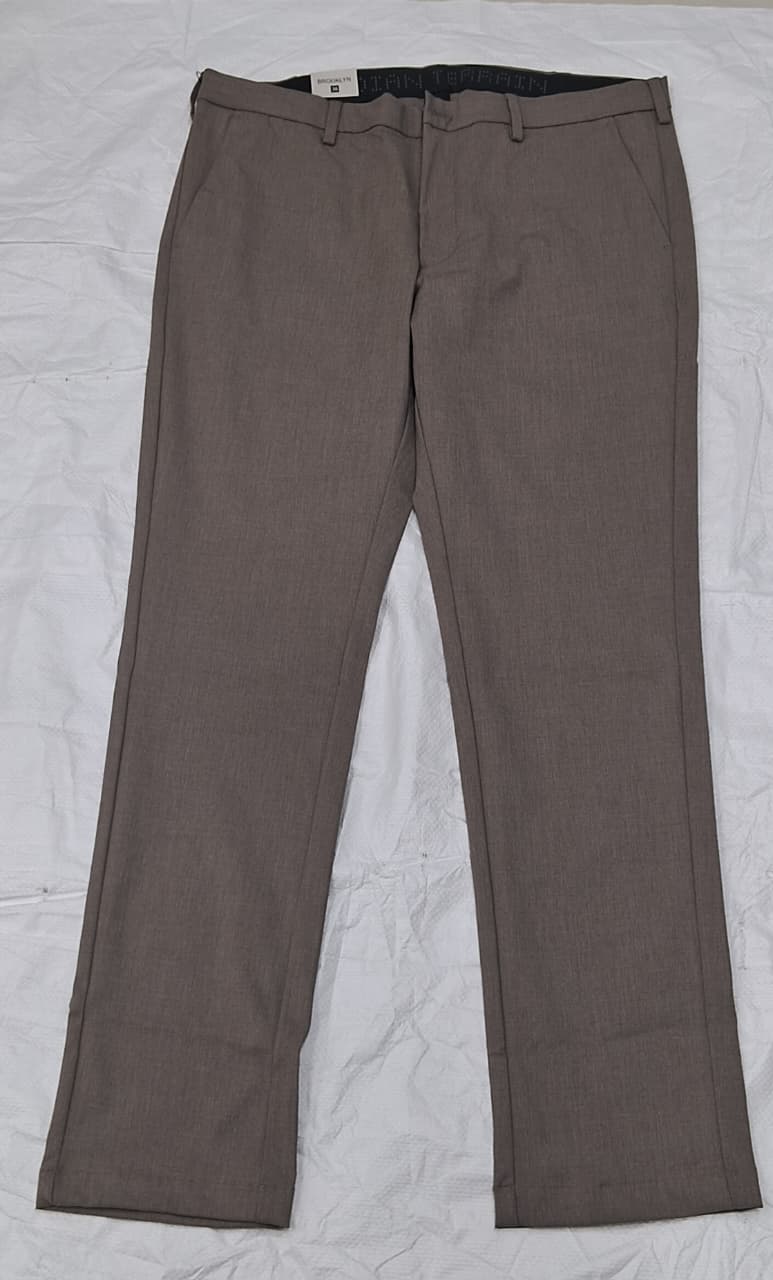
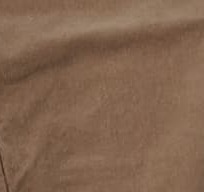
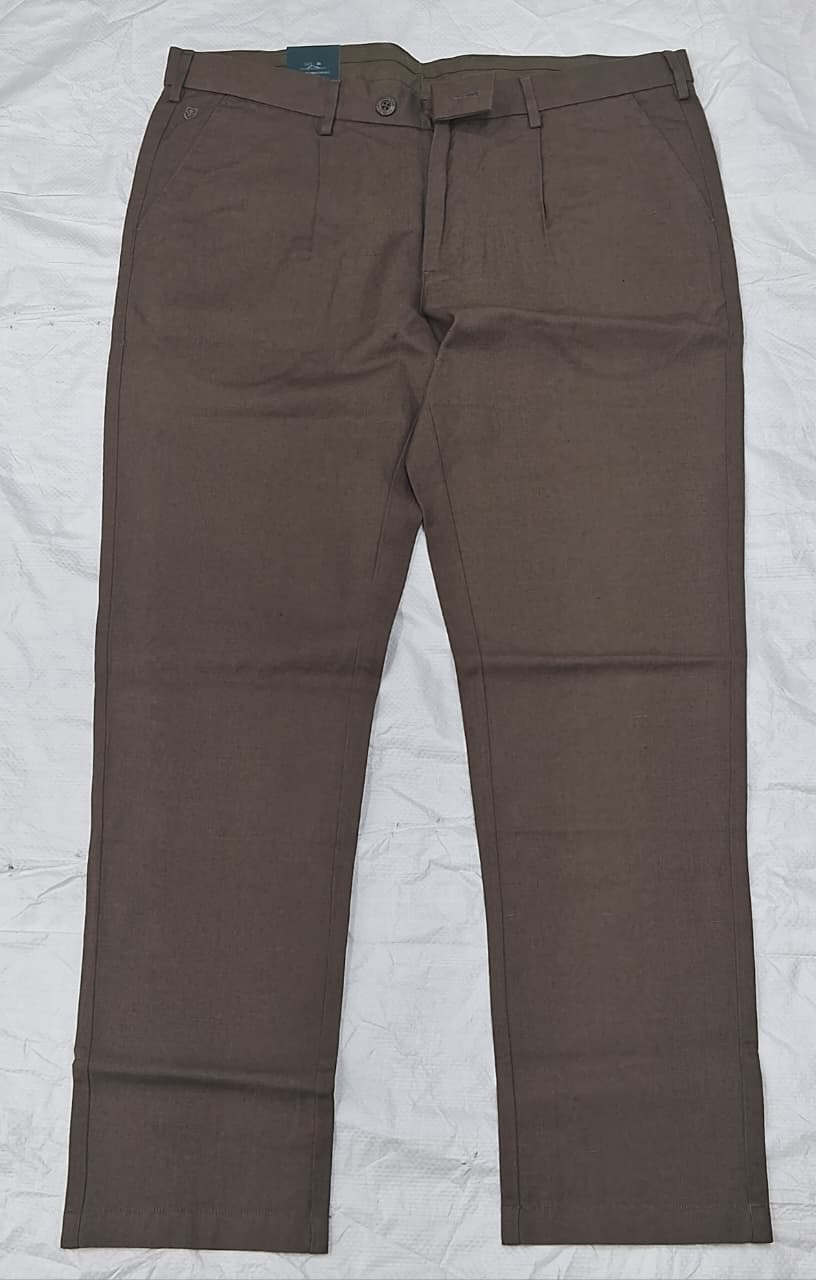
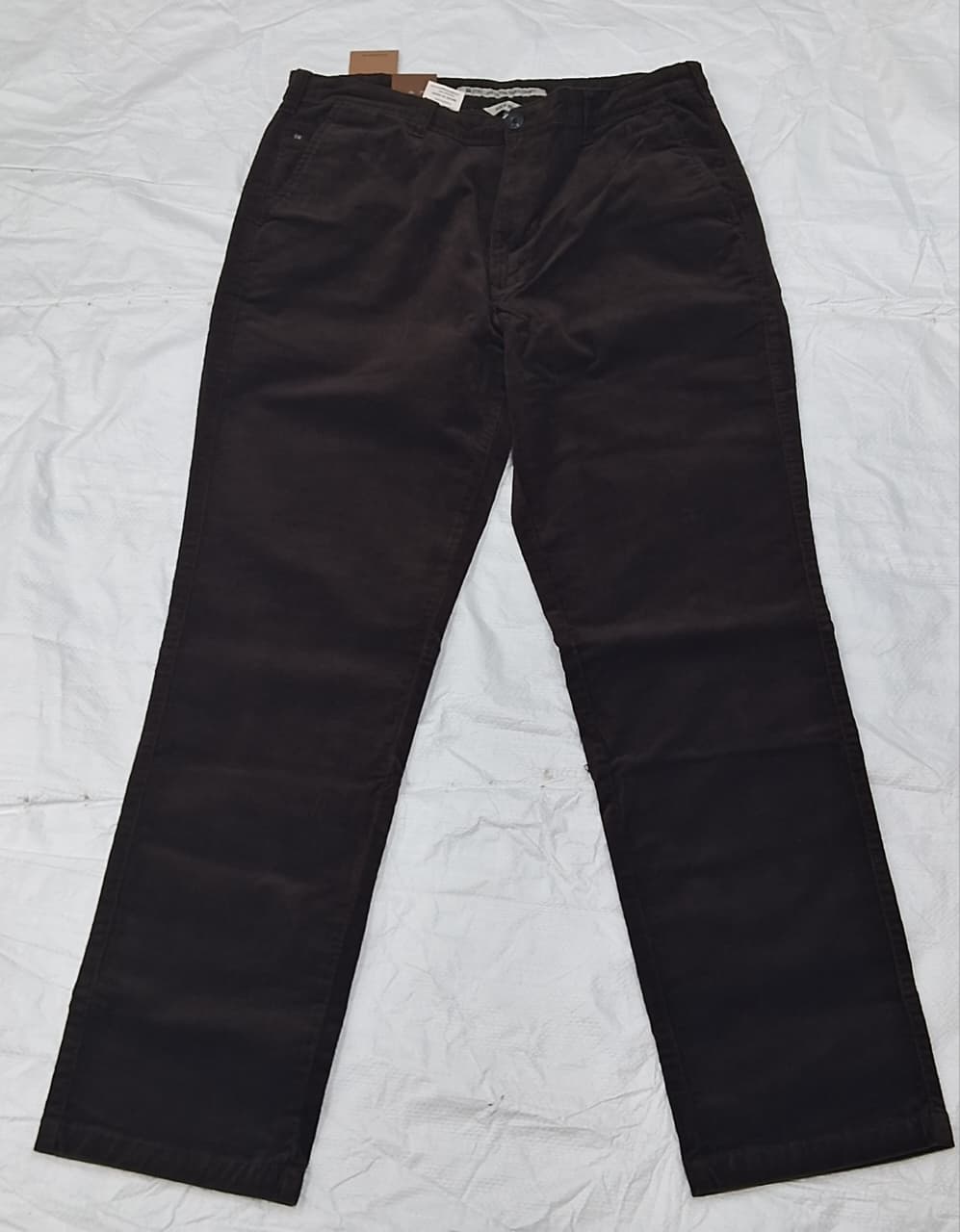
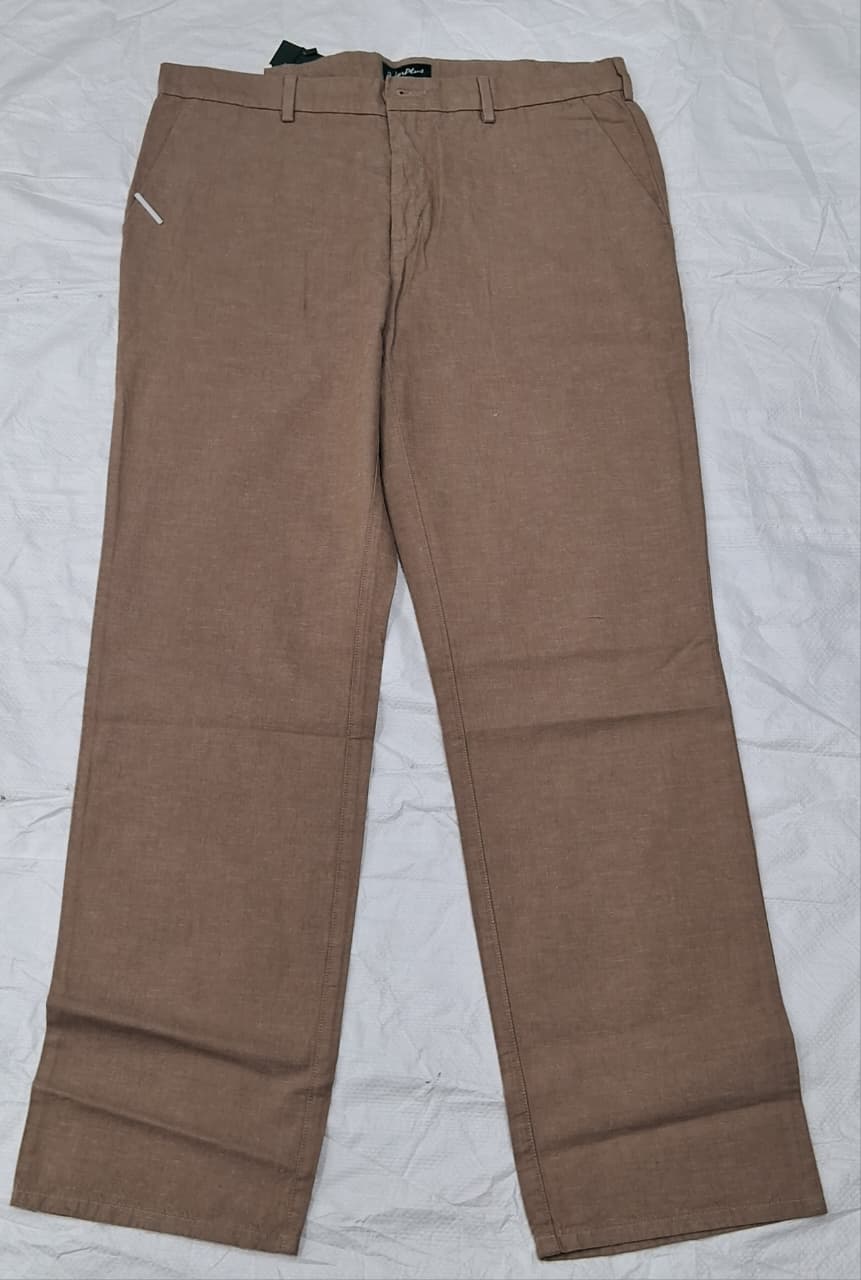
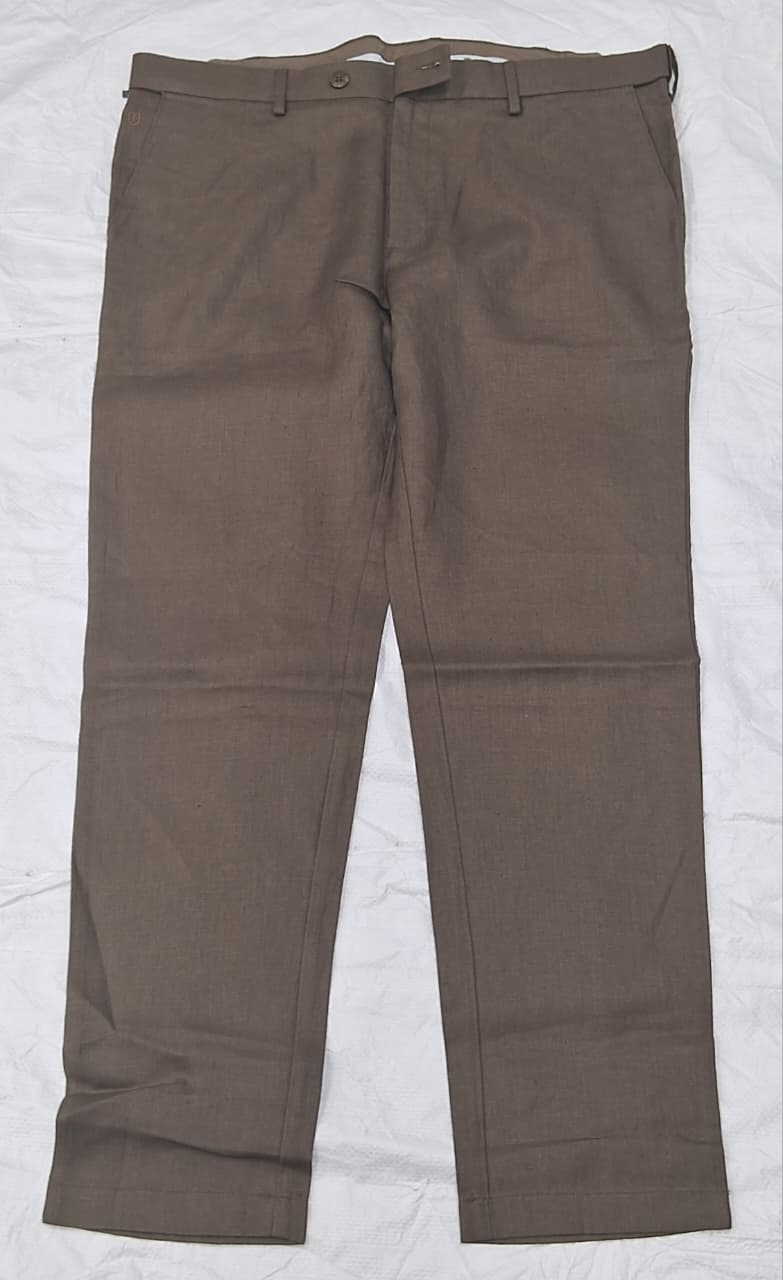
Each swatch below is a close-up of a trouser photographed for this site. It shows the texture and colour typical of a cloth family. It is an illustration, not a statement of the fibre content of any garment. Always check the label.
Wool has been the benchmark of formal trousers for generations, and for good reason. Its fibres are naturally springy, so wool recovers from creasing, holds a pressed line and drapes in a smooth, unbroken fall. Finely spun “worsted” wools give the smooth, slightly lustrous surface associated with suiting.
Contrary to its reputation, lightweight wool can be comfortable in warm weather, because it breathes and handles moisture well. It does need care: brush and air it between wears, press with a cloth, and dry clean or wash only as the label allows.
Composition
Natural animal fibre; often worsted spun
Texture
Smooth to fine-textured
Weight
Tropical to heavy
Drape
Fluid, unbroken
Breathability
Good
Stretch
Natural give; none added
Durability
Good with rotation
Season
Year-round by weight
Care
Air, brush; per label
Lower-leg detail · Blue cloth
Pl. 1Illustrative garment
Ref. 02 — Wool Blends
Wool Blends
Wool blends combine wool with synthetic fibres such as polyester, or with others like viscose or elastane. The aim is to keep much of wool’s look and drape while adding durability, crease resistance or easier care.
For daily office wear, a well-made wool blend is a sensible compromise: it holds a crease, resists wrinkling on the commute and often costs less to maintain than pure wool. The higher the wool share, the closer the handle and drape are to pure wool.
Composition
Wool with polyester, viscose or elastane
Texture
Smooth, often slightly crisp
Weight
Light to mid
Drape
Good, slightly firmer
Breathability
Moderate to good
Stretch
Some, if elastane added
Durability
Very good
Season
Year-round
Care
Per label; often easier
Lower-leg detail · Taupe-brown cloth
Pl. 2Illustrative garment
Ref. 03 — Cotton
Cotton
Cotton is soft, breathable and comfortable against the skin, which makes it a natural choice for warm, humid climates. Formal cotton trousers are usually woven as twill or gabardine: dense, smooth weaves with a diagonal structure that resists wear.
Cotton has a more matte, relaxed character than wool and creases more readily, so it sits slightly lower on the formality scale. It shines in smart and business-casual settings. Pressing restores its line, and most cottons are washable at home, though dark colours can fade over time.
Composition
Plant fibre; twill, gabardine, drill
Texture
Matte, soft, sometimes ribbed
Weight
Light to mid-heavy
Drape
Softer, more relaxed
Breathability
Very good
Stretch
None unless blended
Durability
Good; can fade
Season
Warm and humid weather
Care
Usually washable; press
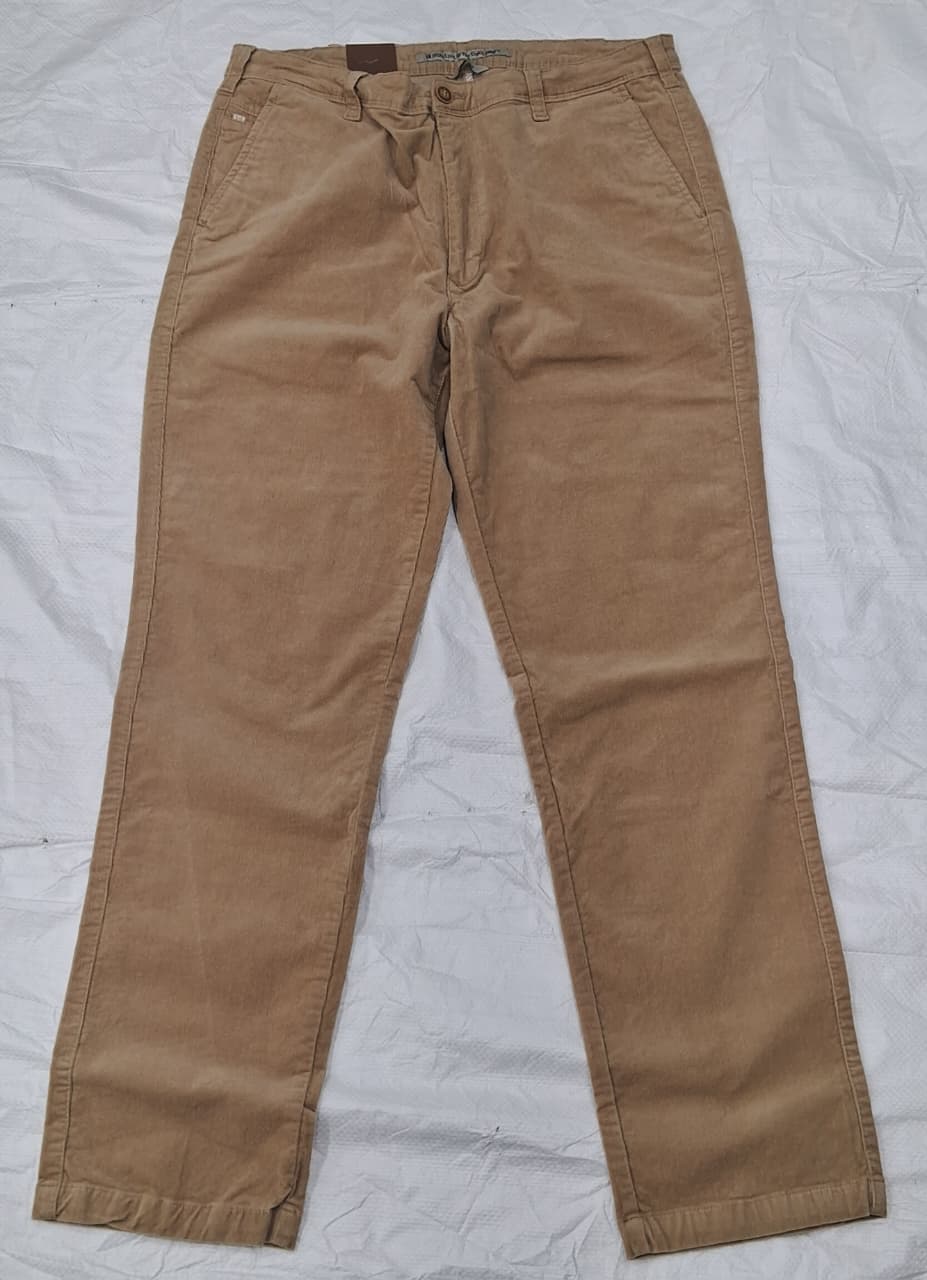
Lower-leg detail · Camel textured cloth
Pl. 3Illustrative garment
Ref. 04 — Cotton Blends
Cotton Blends
Cotton blends pair cotton with other fibres, most often polyester or a small proportion of elastane, to improve on cotton’s weaker points. The blend creases less, keeps its shape longer and often dries faster.
They are a practical everyday option for office wear and travel, keeping much of cotton’s comfort while looking tidier at the end of the day. Check the label: the balance of fibres changes the handle a lot.
Composition
Cotton with polyester or elastane
Texture
Smooth to lightly textured
Weight
Light to mid
Drape
Moderate
Breathability
Good
Stretch
Often a little
Durability
Very good
Season
Most seasons
Care
Usually washable
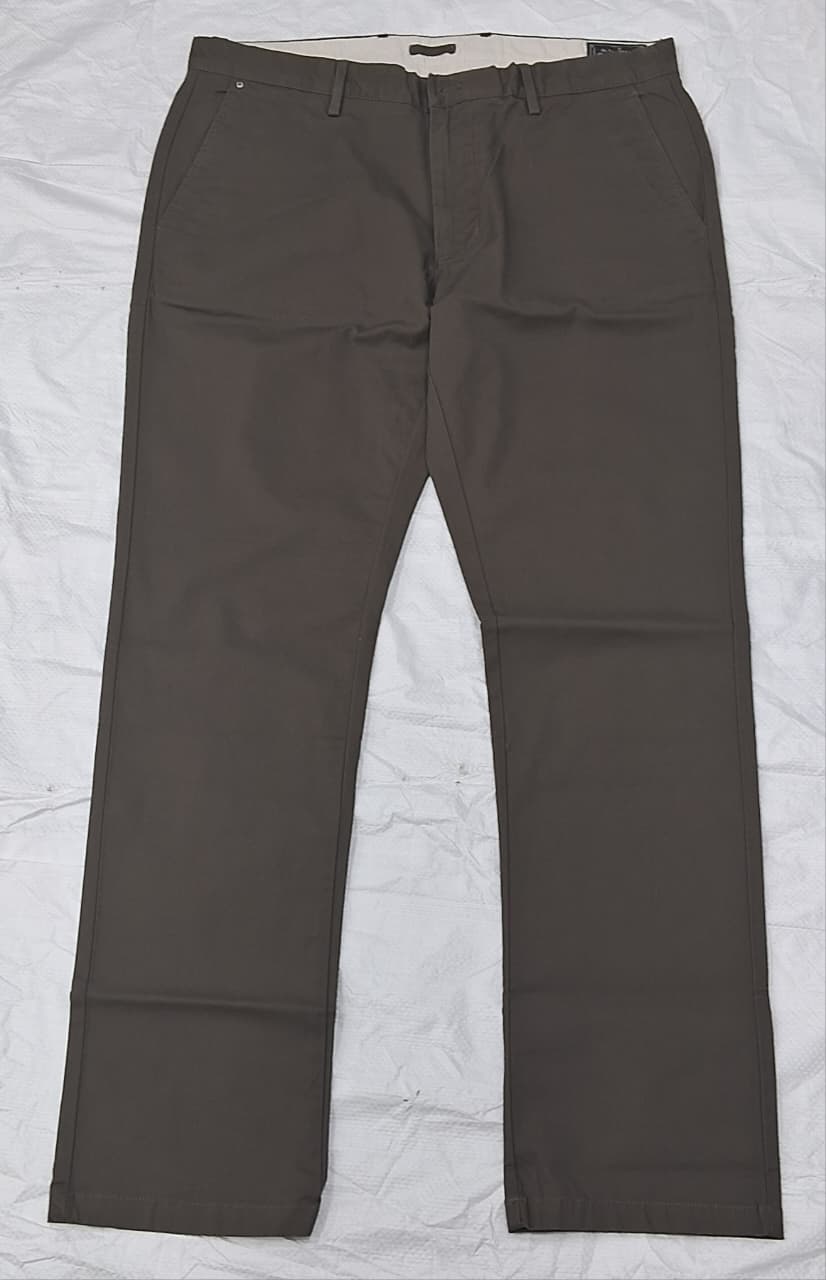
Lower-leg detail · Olive-brown cloth
Pl. 4Illustrative garment
Ref. 05 — Polyester Blends
Polyester Blends
Polyester blends, including the popular polyester-viscose combination, are widely used in formal trousers for their wrinkle resistance, colour fastness and simple upkeep. Viscose adds softness and drape; polyester adds strength and shape retention.
These cloths are easy to live with: they hold a crease, travel well and generally wash without fuss. They tend to breathe less than natural fibres, so lighter weaves and a comfortable fit matter in heat.
Composition
Polyester with viscose, wool or cotton
Texture
Smooth, sometimes slight sheen
Weight
Light to mid
Drape
Good, even fall
Breathability
Moderate
Stretch
Some blends include it
Durability
Very good
Season
Air-conditioned interiors
Care
Easy; low heat when pressing
Lower-leg detail · Brown cloth
Pl. 5Illustrative garment
Ref. 06 — Stretch Fabrics
Stretch Fabrics
Stretch fabrics include a small share of elastane (also called spandex or Lycra) woven into wool, cotton or synthetic cloth. Even a few percent adds noticeable give at the knee and seat, and helps the trouser recover its shape after sitting.
Stretch is ideal for slimmer cuts, active days and travel. Look for a trouser that still drapes rather than clings, and avoid high heat when washing or pressing, which can weaken elastane over time.
Composition
Base fibre plus a little elastane
Texture
Varies with base cloth
Weight
Light to mid
Drape
Closer to the body
Breathability
Depends on base fibre
Stretch
Yes, the point of it
Durability
Good; avoid high heat
Season
Year-round
Care
Low heat; per label
Lower-leg detail · Burgundy texture
Pl. 6Illustrative garment
Ref. 07 — Textured Weaves
Textured Weaves
Not every formal cloth is plain. Herringbone, birdseye, sharkskin, nailhead and fine checks create depth through the weave itself: they look solid from a distance but reveal pattern up close.
Textured trousers add interest to a simple outfit while staying formal. They pair well with plain shirts and smooth jackets, and they hide minor creasing better than flat, smooth cloths. Keep the rest of the outfit quiet so the texture can be noticed.
Composition
Any fibre; pattern woven in
Texture
Visible weave structure
Weight
Mid to heavy
Drape
Good, with body
Breathability
Varies by weave
Stretch
Varies
Durability
Good; hides wear well
Season
Cooler months; interiors
Care
Per fibre and label
Lower-leg detail · Camel weave
Pl. 7Illustrative garment
Ref. 08 — Seasonal Weights
Seasonal Weights
Cloth weight, often given in grams per square metre or ounces per yard, has as much effect on comfort as fibre. Light cloths with open weaves let air through; heavier cloths drape more and keep their shape but feel warmer.
In Mumbai’s heat and humidity, lighter and breathable cloths are usually most comfortable outdoors, while mid-weights suit air-conditioned offices. Heavier cloths are better kept for cool-weather travel and evening occasions.
Composition
Any fibre; defined by weight and weave
Texture
Open to dense
Weight
Light, mid or heavy
Drape
Heavier drapes more
Breathability
Lighter breathes more
Stretch
Varies
Durability
Heavier lasts longer
Season
Choose by climate
Care
Per label
Lower-leg detail · Olive-brown weave
Pl. 8Illustrative garment
At a glanceII.
Comparing the cloth families.
Family
Drape
Crease holding
Breathability
Wrinkle resistance
Typical care
Formality
Wool
Excellent
Excellent
Good
Recovers overnight
Brush, air, dry clean / per label
Highest
Wool blends
Very good
Very good
Moderate–good
Good
Per label; often easier
High
Cotton
Soft
Moderate
Very good
Low
Wash and press
Smart / business casual
Cotton blends
Moderate
Good
Good
Good
Usually washable
Business casual to smart
Polyester blends
Good
Very good
Moderate
Very good
Easy; low iron heat
Office everyday
Stretch
Close
Depends on base
Depends on base
Good
Low heat
Depends on base
Textured weaves
Good, with body
Good
Varies
Hides creasing
Per fibre
Formal to smart
General characteristics. Individual cloths vary with fibre quality, yarn, weave and finish.
Seasonal suitabilityIII.
Dressing for the weather.
i.
Heat & humidity
Lightweight, open weaves in breathable fibres such as cotton, linen-rich blends and tropical wools. Lighter colours reflect heat. Choose a comfortable thigh and rise so air can circulate.
ii.
Air-conditioned interiors
Mid-weight wools, wool blends and polyester blends hold their shape through long seated days and handle the change between hot streets and cool offices.
iii.
Cool travel & evenings
Heavier cloths and textured weaves like flannel and twill add warmth and body. They drape beautifully and suit darker, richer colours.
CareIV.
Caring for formal trousers.
Good care keeps a trouser’s line, colour and drape for longer. The garment’s care label always comes first. These are general habits that help.
Hang them properly
Hang trousers by the hem from a clip hanger, or folded along the crease over a padded bar, so gravity pulls out minor creases.
Rotate between wears
Rest a pair for a day or two between wears. Wool in particular recovers its shape when given time.
Brush, don’t over-wash
A soft clothes brush removes dust from wool and textured cloths. Spot-clean small marks rather than washing the whole garment.
Press with care
Use a pressing cloth on wool and dark fabrics to avoid shine. Keep heat low on synthetics and stretch fabrics.
Follow the label
Some cloths should only be dry cleaned; many cottons and blends are washable. Wash inside out on gentle cycles to protect colour.
Store for the season
Keep trousers clean, dry and ventilated, especially in humid months, to prevent mustiness and mildew.